Log rot is sneaky. It starts as a single soft spot on a log. Left alone, it works its way through a whole wall before you ever notice something is wrong.
That is why catching it early matters so much. A small, surface-level fix usually costs $400 to $3,500 per log section. Wait until the rot has spread through several logs, and you are looking at $15,000 to $60,000 or more on a mid-sized home.
This guide walks you through the whole process of how rot starts. How to spot it. What to do about it. And when it is time to call in a crew.
Why Log Rot Is Worse Than It Looks
The biggest mistake log home owners make is trusting their eyes. A log can look fine on the outside and be hollow and crumbling on the inside. Think of a tooth that looks healthy until it cracks. Stain and paint can hide rot for months, sometimes years.
That is because the rot does its real damage out of sight. By the time you can see soft spots or discoloration, the inside of the log may already be in bad shape.
Sometimes the first sign isn’t even in the logs. Floors that have started to slope. A ceiling that sags. Doors that stick. A staircase that leans. In a log home, the walls hold the house up. So rot in the logs puts the whole place at risk.
And the longer you wait, the bigger the job gets. Catch it while the damage is shallow, and the fix stays small.
How Log Rot Spreads
Rot is not logs getting old. It is a living thing. It needs three things to grow: water, air, and fungus. Take away any one of them and the rot stops. The trouble is, water is everywhere. Once it gets into a log, the clock starts running.
But water alone does not equate to log rot. Rot is a fungal decay. You don’t have to prevent logs from ever being exposed to water. You simply need to prevent trapped, repeated, or prolonged moisture conditions that allow decay fungi to stay active.
How Water Gets Into Logs
Water is patient. It finds every crack, gap, and weak spot on the outside of a log home. When the stain or finish wears out, water can soak into the wood instead of shedding off the surface. Cracks that run along the top of a log hold rainwater like a little gutter. When the flashing around a window or door fails, water sneaks in at the seam. Logs near the ground often stay wet from splashback, melting snow, poor drainage, or landscaping that traps moisture against the wall.
Even damp air plays a part. Shaded walls, especially on the north side, can stay damp long after a rain because they do not get enough sun or airflow to dry out quickly. The cut ends of logs at the corners can absorb water faster than the face of the log because the end grain is more exposed. That is why log ends and corners are often some of the first areas to fail.
Once water has a way in, the next problem is how long it stays there. A wet log does not rot simply because it got rained on once. Rot starts when moisture stays in the wood long enough for decay fungi to become active.
How the Fungus Takes Over
Fungus is already there. The spores float in the air and sit in the soil around every log home. They are waiting for one thing: water.
Once a log stays wet enough for long enough, decay fungi can begin to grow. Research on wood decay puts the tipping point at about 25 to 30 percent moisture. Below that, the wood is too dry for the fungus to do much. Above it, there is enough water in the wood for the fungus to feed.
And feed it does. The fungus breaks the log down from the inside and lives off what it pulls apart. The wood gets softer and weaker as it goes. Warm, damp weather speeds up the whole process, which is why a wet summer is hard on a log home.
Why Rot Spreads Faster Than You Would Think
Here is the part that catches people off guard. Some kinds of rot can pull water from a wet log into a nearby dry one. So the rot does not stay put in the soggy spot. It can reach up from a damp foundation log into a drier log above it and keep going. This is often referred to as “wicking”.
In steady wet conditions, the fast-growing fungus takes over, and the damage accelerates. A log that seemed solid in spring can be soft inside by fall if it stayed wet all season. This is why you check your logs on a schedule. It is the only way to catch this early.
The Three Kinds of Rot and What They Do
Not all rot looks or acts the same. There are three main kinds. Each one attacks the wood a little differently and leaves its own clues. Knowing which one you have got tells you how worried to be.
Brown Rot: The One That Steals Strength
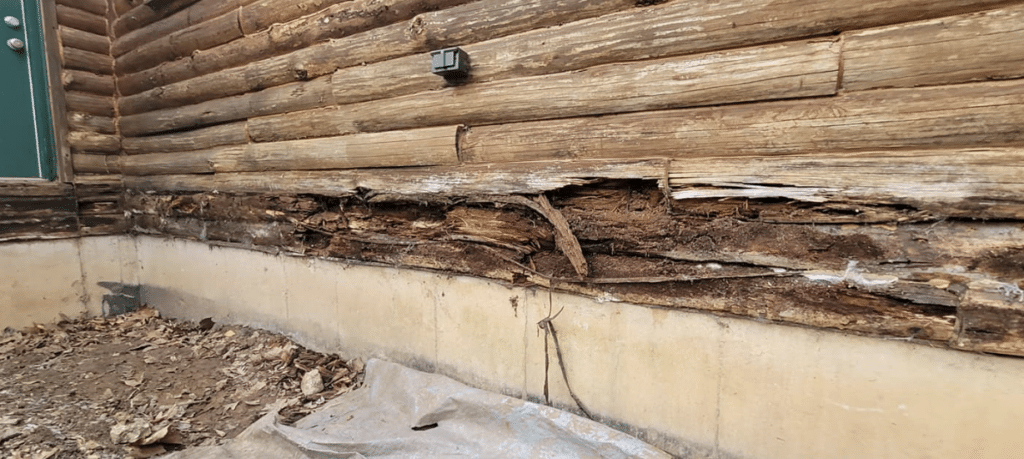
Brown rot is the most common kind in log homes, and it is the one that does the most damage to a log’s strength. It eats the parts of the wood that hold it together and leaves behind a brown, crumbly mess that breaks apart into little cubes.
What makes brown rot dangerous is how fast it weakens a log. The wood loses its strength early, well before it looks bad. A log with brown rot can look solid from across the yard and be brittle as a cracker on the inside.
White Rot: The Soft, Stringy One
White rot works differently. It breaks down all of the wood, not only part of it. The wood turns pale, soft, and stringy. It often feels wet and spongy when you touch it.
White rot tends to weaken a log more slowly than brown rot. But given enough time and water, it leaves the wood bleached, spongy, and every bit as weak.
Soft Rot: The Slow One
Soft rot shows up in the wettest spots and works more slowly than the others. It mostly stays near the surface, leaving the wood looking bleached or brown.
Slow does not mean harmless. Soft rot does the same kind of damage as brown rot once it sets in. A log that has had soft rot is still weak. If you find it, the wood underneath has usually already lost its real strength.
What Rotting Wood Looks Like
Knowing how to spot rot is one of the most useful things a log home owner can learn. The signs change a lot between early and late. Catch it early, and the fix is small.
Early Signs
Early rot is quiet, which is what makes it tricky. Look for a log that has gone a little darker, grayer, or duller than the ones next to it, especially in spots that stay damp. Wood that feels cool and damp but still firm is telling you the moisture is there.
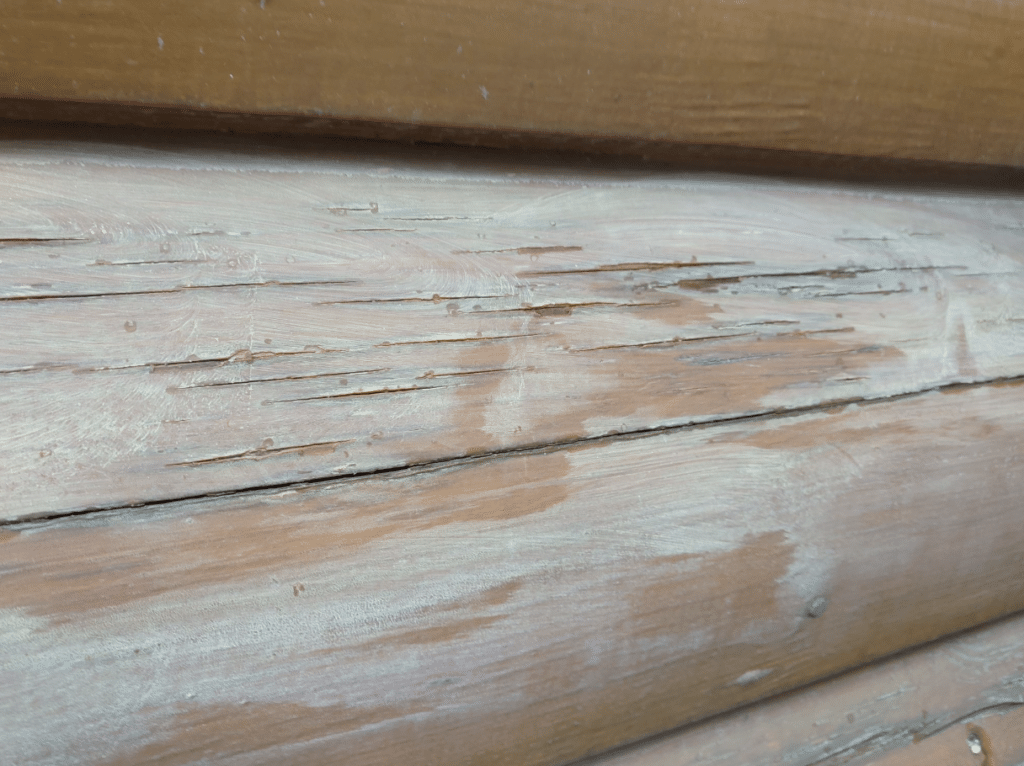
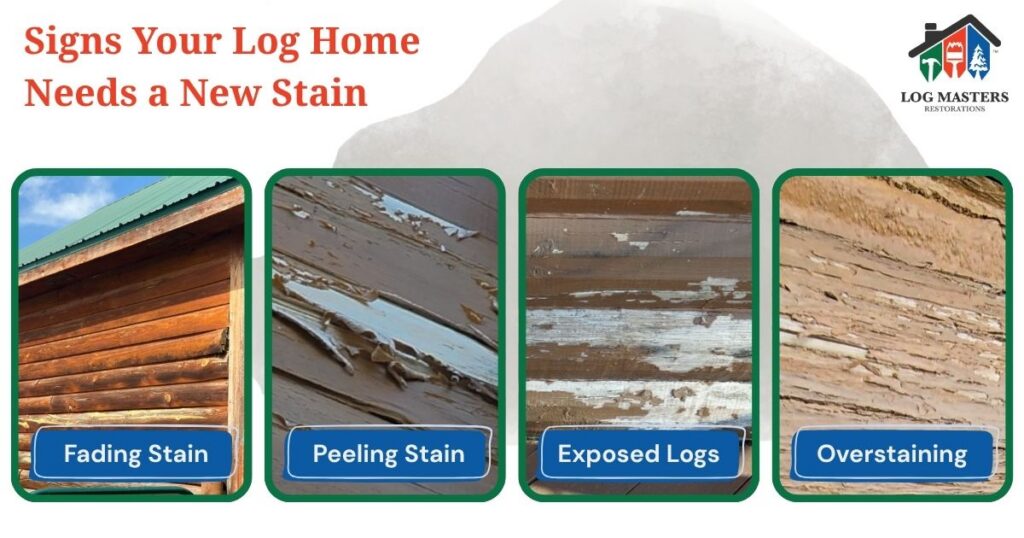
Watch your finish closely. Stain that is cracking, peeling, bubbling, or blistering is often a sign that moisture is getting behind the coating. Paint will almost always crack, peel, or blister on logs over time, and it can also trap moisture in the wood, creating the conditions fungi need to grow. For that reason, paint should be removed from log walls as soon as reasonably possible.
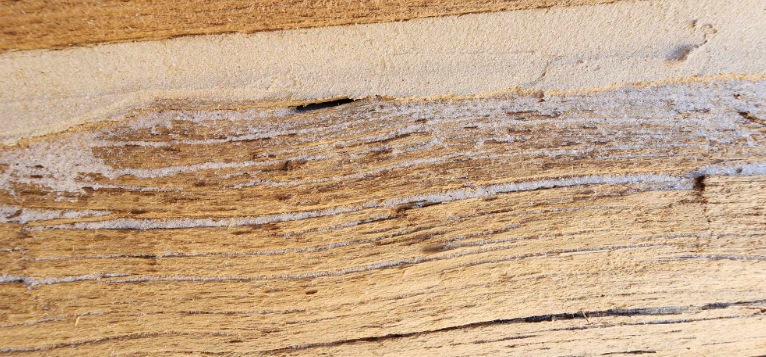
Once the stain has reached the end of its service life, water gets into the log instead of shedding off the surface. If that moisture stays trapped, the conditions for rot begin. In dark, damp spots like under a deck or behind trim, look for fine white threads that look like cotton. That is the fungus settling in before the wood shows damage.
Pay attention to checks or cracks that run along the top side of a log. Not every check is a problem. Downward-facing or angled checks often allow water to drain away naturally. The ones that deserve attention are upward-facing checks that create a small trough, boat, or dam where rainwater can sit.
When water collects in a check and cannot drain or dry out, it can soak deeper into the log and create the conditions for decay. From a few feet away, the log may still look solid, even while moisture is being held inside season after season.
Later Signs
Once rot has been at it a while, the signs get easy to see. Wood that gives way under your thumb. Wood that crumbles into powder. A screwdriver that sinks in with no fight. Brown rot leaves block-like cracks, like little cubes. Wet rot feels soft and damp instead of dry and brittle.
The color usually changes too, going darker, browner, or bleached. Pull at it, and it comes away stringy. In the worst cases, mushrooms grow right out of the log. By then, the wood around them had lost a lot of strength.
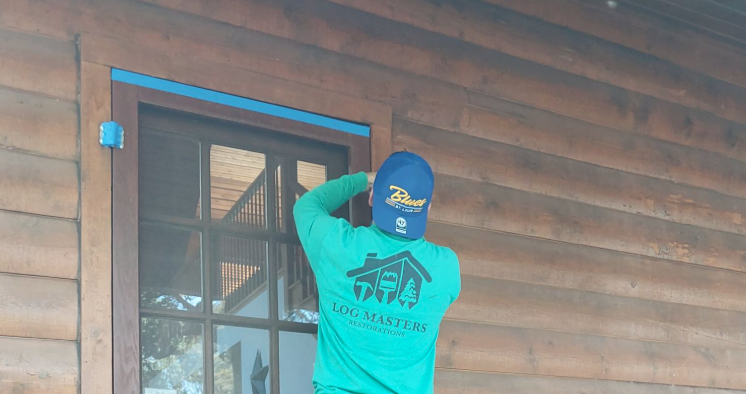
A quick test the crew at Log Masters Restorations uses is a metal skewer. Push it into a log you are worried about and see how far it goes. Less than a quarter inch is usually fine. Deeper than that means rot inside, and it is worth getting checked. For soft spots, write the depth on a piece of blue tape, stick it on the log, and keep going until you hit solid wood. That tells you how much of the log is bad.
Where Rot Usually Starts
Rot does not pick spots at random. It follows the water.
The most common place is the bottom row of logs, the ones closest to the ground. They take splashback from the rain, stay wet from snowmelt, and sit close to damp soil. They stay wet the longest and dry the slowest, so they tend to go first.
The ends and corners of logs are next. Cut ends soak up water fast, and if they are not sealed and kept up, they pull in water every time it rains. Windows and doors collect water at the seams, especially when the flashing or caulk gives out. Cracks on the top of a log hold standing water that seeps inside.
Anywhere something is bolted or attached to the wall deserves a look, too. Decks, porch ledgers, and hardware all trap water between the log and the other material. The same goes for spots where the roof meets the wall, especially around additions and dormers.
How to Stop Rot From Spreading
Once you have found rot, the job is to stop it. The approach is the same for an early surface spot or something further along. Dry it out, remove the bad wood, and protect what remains.
Dry It Out First
Fixing rot without fixing the water is like bailing a boat without plugging the hole. Any repair you make will fail if water keeps getting in.
Start with the water. Clean your gutters and downspouts and make sure they push water away from the house. If the soil slopes toward the logs, regrade it. Fix any failed flashing over windows, doors, and where the roof meets the wall.
Then check your seals. Go around and look at the caulk and chinking at every joint. Gaps and cracked, worn-out sealant are an open door for water. Replacing bad chinking is one of the cheapest ways to protect your logs. Keep the wood under about 20 percent moisture, and the fungus stays asleep. Dry logs are your best defense.
Take Out the Bad Wood
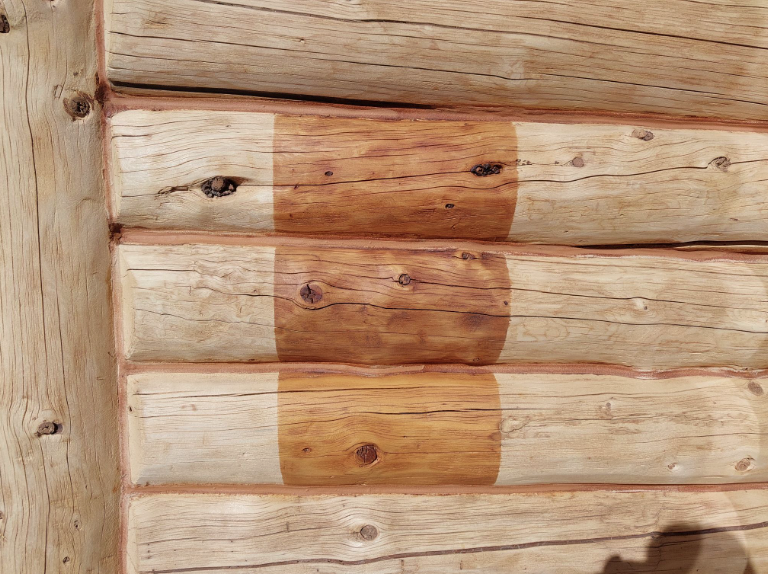
You cannot paint over rotten wood and call it fixed. Rotten wood has to be removed back to solid, dry wood. For shallow rot where the log is still structurally strong, the soft or decayed wood is dug out, the remaining sound wood is treated, and the area is rebuilt with a wood epoxy filler made for log homes. Depending on the repair, the surface may be shaped, wood grain may be etched back in, and the area is sanded and stained to blend with the surrounding log.
When a larger section of log is affected, part or all of the log may need to be replaced. The crew removes all neighboring rot until only sound wood remains, then treats the surrounding area to help protect it before the repair is completed. If a treatment product is used, it needs proper dwell or cure time before filler, stain, or finish is applied. The goal is not to cover damp or questionable wood. The goal is to remove the decay, address the conditions that caused it, and rebuild only over clean, solid wood.
Protect What Is Left
Once the rot is out, protecting the good wood is what keeps the problem from coming back. Use a stain made for log homes that soaks in. It gives you the best mix of sun and water protection. Generic exterior products often seal moisture in rather than letting the wood breathe, which can worsen hidden rot.
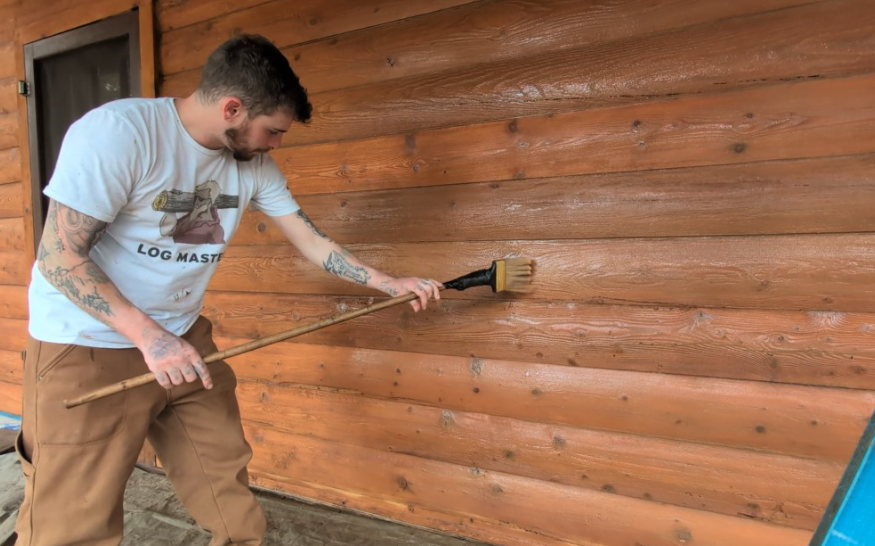
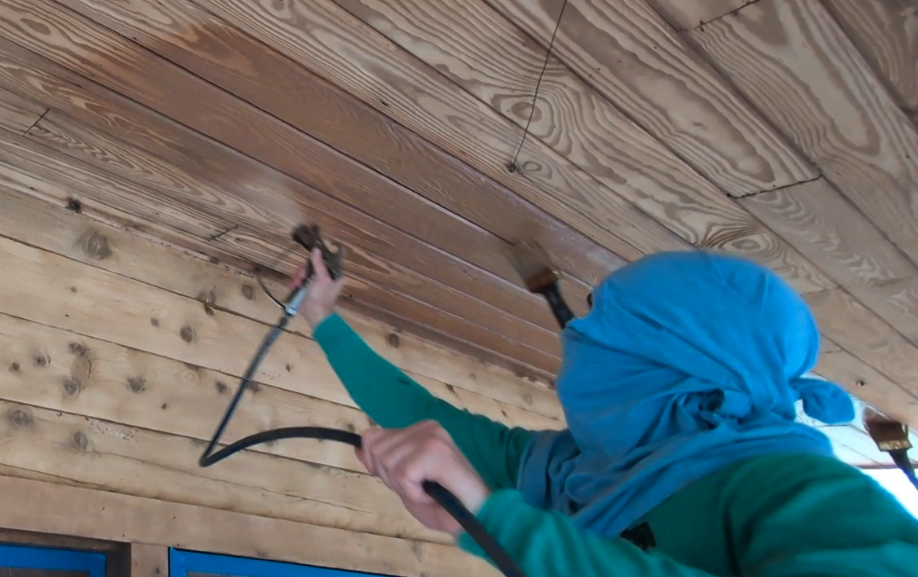
Log Masters Restorations does exterior staining with penetrating stain, prepped, sprayed, and back-brushed so the stain penetrates the cracks rather than sitting on top.
Plan to restain every three to five years. Sooner if water stops beading up or the sunny walls start to fade. Add a wash once or twice a year to clear off the dirt and grime that holds moisture against the logs. Together, that is what keeps rot from getting a foothold.
When It Is Time to Call a Pro
There is a clear line between what you can handle and what needs a trained crew. It comes down to one thing: is the log still holding weight? If your skewer hits soft, punky wood deeper than you expected, if you find soft spots across several logs, or if doors are sticking and floors are bouncing, the rot has gone beyond a surface fix.
Repairing rot in the logs that hold the house up is not a weekend project. Pull a structural log without the right support, and the wall can shift, things can break, or worse. This work takes training, the right gear, and an eye that can tell if a log needs a patch, a half-log, or a full replacement. Doing it without that puts the house and the people in it at risk.
If you think you have structural rot, take photos, mark your skewer depths with tape, and get a crew out to look. Log Masters provides free estimates based on emailed photos and measurements before anyone schedules a visit.
How a Crew Fixes Rot
A real rot repair is more than cutting out bad wood and slapping in filler. It starts with a thorough look at the log to determine how far the rot extends and whether the log can still support weight.
On the repair-or-replace call, there is no official rulebook that says replace at a set percent. The
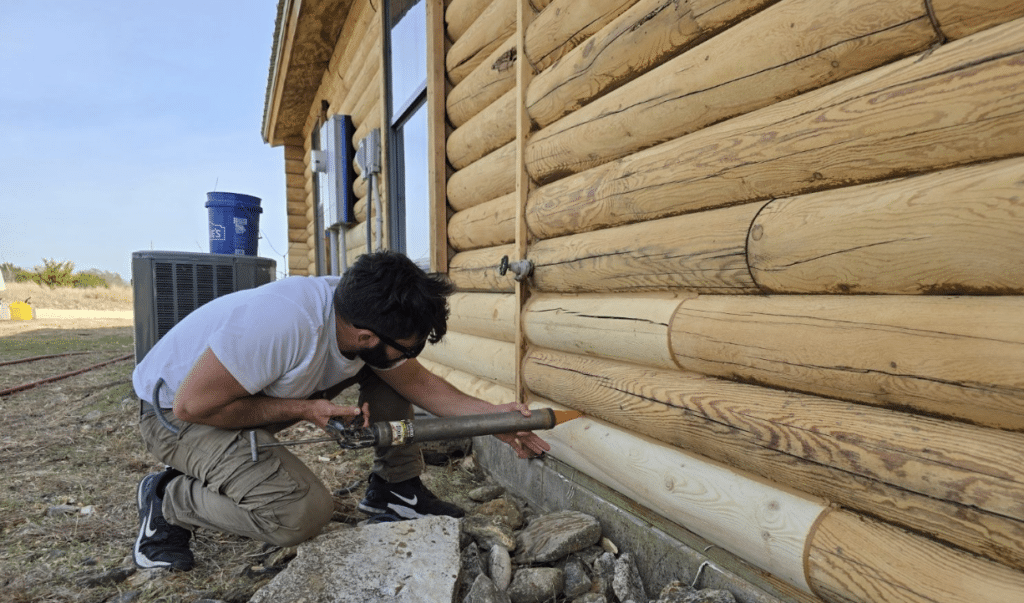
For small or shallow rot, the crew digs out the bad wood, treats it, and rebuilds the spot with filler. The log keeps its look, and you skip a full replacement. For a larger repair, the decayed section is cut back to sound wood, the remaining rot is removed, and a clean, solid base is prepared. A matching half-log is then fitted into place and secured with lag screws before the repair is shaped, sanded, and stained to blend with the surrounding logs. Any gap wider than a quarter inch gets backer rod before it is chinked or caulked, so water stays out.
For a full swap, the crew props up the wall with temporary supports, pulls the bad log, and cuts a new one to fit. They hide the lag screws as much as they can, then chink or caulk every edge before staining.
Here is what that looks like on a real house. A homeowner found soft spots along the base of their north wall one spring, on a side that stayed shaded and wet through a soggy season. The skewer sank almost an inch across about six feet of the bottom log. That is advanced brown rot. The crew cut out the bad wood back to solid log, treated it, and set it in a half-log with screws, then caulked the edges. Because the rot had not reached the middle of the log, they did not need a full replacement, which kept costs down. They stained it to match, and the next year it checked out clean.
The numbers move fast as the job grows. A small surface repair usually runs $400 to $3,500 a spot. A partial log replacement runs around $2,500 to $3,000 a log. A full structural replacement runs $2,000 to $8,000 or more per log. A whole-home restoration with several structural logs on a 1,500- to 2,000-square-foot home often costs between $15,000 and $60,000, depending on severity, accessibility, and whether it is bundled with blasting and staining.
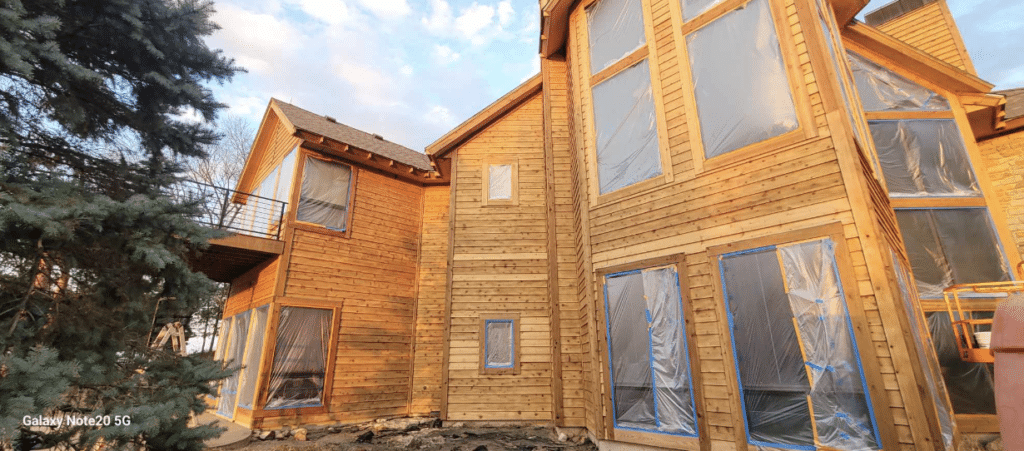
After the repair, the new wood is stained and sealed to protect it and help it blend with the rest of the home. If only a log rot repair is being done, the crew will match the existing stain as closely as possible, but fresh stain and new wood may still stand out against older, weathered logs. Even during a full restoration, a replacement log has not aged the same way as the surrounding logs, so an exact match can be difficult and sometimes impossible. Darker stains are often easier to blend, while lighter stains or finishes that show more grain can make color differences more noticeable.
Log Masters’ maintenance plans cover regular washing, touch-ups, and rot checks that catch small problems before they become big ones.
Common Questions About How Log Rot Spreads
How do I know if my logs are starting to rot? Look for soft spots, discoloration, peeling or cracked finish, damp areas that do not dry, and mold or mildew. Check the splash zones, the shaded walls, the spots near the ground, and where the roof meets the wall. The skewer test is your friend. If it sinks past a quarter inch, mark the spot and get it looked at.
What causes log rot? Almost always water. Dirt and debris that trap moisture, worn-out or mismatched stain, poor seals and chinking, leaks, and bug damage all contribute to it. Bare or damaged wood plus skipped maintenance is the fast track to rot.
Can rotten sections be repaired instead of replaced? Often, yes. If the rot is shallow or less than half the log, a crew can dig it out, treat it, and fill it. If more than half the log is gone, replacement is the better long-term call.
How often should I wash my log home? A light wash once or twice a year, usually in spring and fall, clears off the debris that holds water against the logs. Mild soap, a hose, and a soft brush do the job.
How often does a log home need restaining? Every three to five years, as a rule, or sooner if water stops beading or the sunny walls look faded. A breathable, log-specific stain with good sun protection holds up best.
How do I keep rot away for the long haul? Wash it, reseal it on schedule, fix bad chinking and caulk right away, keep water draining away from the house, and have a pro check it every couple of years. Catching early rot beats paying for a big repair every time.
What if I think I have a serious rot problem? Move fast. Rot gets more expensive the longer it sits, and it spreads into the logs next door. Mark the soft spots, take photos, and call a log restoration crew for a look. Log Masters offers free estimates and can assess your situation before a site visit.
The post How Log Rot Spreads: From Surface Damage to Structural Failure appeared first on Log Home Restoration, Maintenance & Additions | Log Masters.
source
https://logmastersrestorations.com/log-rot-repair/how-log-rot-spreads/